Showing posts with label treatment. Show all posts

Monday, October 27, 2014

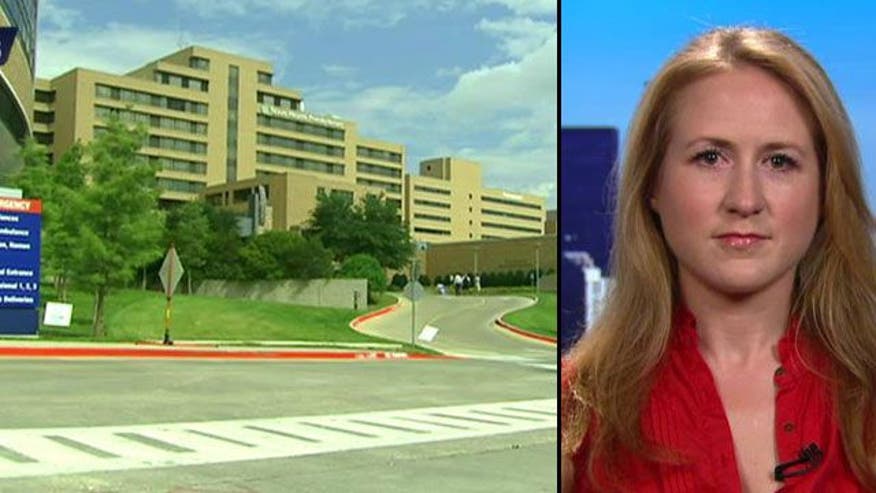
Hospital parent"s CEO apologizes for lapses in Ebola treatment, training

The CEO of the parent company of the Dallas hospital where two nurses have contracted Ebola from a patient who died there earlier this month has apologized for some aspects of the hospital’s response to the deadly virus. 

Texas Health Resources CEO Barclay Berdan issued the apology in the form of a full-page letter published in Sunday’s editions of The Dallas Morning News and the Fort Worth Star-Telegram.  

In the letter, Berdan thanks the staff at Texas Health Presbyterian Hospital for their “dedication, compassion, and tireless work” before acknowledging that “as an institution, we made mistakes in handling this very difficult challenge.” Among those mistakes are hospital staff not communicating that Ebola patient Thomas Eric Duncan had recently traveled to Texas from African when he made his initial visit to the hospital’s emergency room on the night of Sept. 25-26. Berdan also says that the hospital’s Ebola training and education programs had not been fully deployed at the time of Duncan’s visit. 

“In short, despite our best intentions and skilled medical teams, we did not live up to the high standards that are the heart of our hospital’s history, mission and commitment,” Berdan said.

Berdan’s letter comes one day after it was revealed that the hospital did not initially keep a watch list of workers who may have had contact with Duncan, and had asked nurses to take their own temperature and self-report symptoms of Ebola.  

According to the Associated Press, Dallas County Judge Clay Jenkins only ordered the creation of a watch list on Oct. 12, the same day nurse Nina Pham tested positive for the disease, Hospital officials told potentially exposed hospital workers to stop seeing patients other than Pham.

But the next day, the Centers for Disease Control and Prevention allowed another nurse who cared for Duncan, Amber Vinson, to get on a plane in Ohio and fly to Dallas with a mild fever. She was later diagnosed with Ebola, and CDC Director Dr. Tom Frieden has conceded that she “should not have traveled on a commercial airline.”

The inconsistent response by health officials in monitoring and limiting the movement of health workers has been one of the critical blunders in the Ebola outbreak. Friends and family who had contact with Duncan before he was hospitalized were confined to homes under armed guard, but nurses who handled his contagious bodily fluids were allowed to treat other patients, take mass transit and get on airplanes.

“I don’t think the directions provided to people at first were as clear as they needed to be, and there have been changes in the instructions given to people over time,” said Rep. Michael Burgess, R-Texas, a doctor who did his residency in Dallas.

Local health authorities have said repeatedly throughout the response that their guidance and direction can change.

“Please keep in mind the contact list is fluid, meaning people may fall off the list or new people may be added to the list depending on new information that could arise at any time on any given day,” said Dallas County health department spokeswoman Erikka Neroes on Friday when asked how many people are even being monitored.

On Thursday, Jenkins announced stricter restrictions that require hospital staffers who had been potentially exposed to stay away from the public for 21 days and check their temperature twice a day, once in person with a public health worker. It was the first written order anyone being monitored has been asked to sign.

“They can walk their dog, but they can’t go to church; they can’t go to schools; they can’t go to shopping centers,” said Mayor Mike Rawlings.

Public health epidemiologists were notifying the health care workers of the directions Friday, said Texas Department of State Health Services spokeswoman Carrie Williams.

But even those medical agreements allow some wiggle room. For example, they say public transit isn’t outright banned but “should be discussed with the public health authority.”

Officials say 125 friends, family, doctors, nurses, technicians, ambulance drivers and others may have been exposed in the days before Duncan died. Since then, the two nurses have tested positive and at least 18 other people in Texas and Ohio have been identified as secondary contacts who also merit watching.

At first, the monitoring sounded relatively simple: track down the contacts, monitor them with least twice daily temperature records and test people who develop symptoms for Ebola. State officials would be in charge, working with the CDC and Dallas County authorities.

But for a time after Pham was diagnosed with Ebola, different hospital workers had different levels of monitoring, based in part on their exposure risk. Some self-reported their temperatures. Some continued to care for patients. Hospital spokesman Wendell Watson on Saturday referred all questions about the facility’s monitoring practices to county officials.

The county moved Duncan’s girlfriend, Louise Troh, her 13-year-old son, Duncan’s nephew, and a family friend from their apartment to a guarded house in an undisclosed location, where a health official comes by twice a day and takes their temperatures. The unusual confinement order was imposed after the family failed to comply with a request not to leave their apartment, Jenkins said.

Pham and Vinson have been taken to medical centers with isolation units in Maryland and Atlanta. There are four such centers in the U.S.

At the National Institutes of Health medical center in Bethesda, Maryland, spokeswoman Amanda Fine says staff involved in caring for people with Ebola are given thermometers and instructions and must measure and submit body temperatures twice daily.

Taylor Wilson, a spokesman for the Nebraska isolation unit, which has also been treating Ebola patients, said that every time health care workers go into the unit, they must stop and take their temperature and other vital signs and log the results. They are also advised to keep an eye out for any symptoms.

He said that there are no restrictions on the staff’s movements outside of work.

In Washington, President Barack Obama presided at a rare Saturday evening meeting of Cabinet officials and advisers on health and security to receive an update on domestic Ebola cases and the status of tracing, contacting and monitoring people who may have come into contact with Ebola patients in Dallas. The meeting included a discussion of broader steps to increase the preparedness of the nation’s health sector, the White House said.

The Associated Press contributed to this report. 


View the original article here


Hospital parent"s CEO apologizes for lapses in Ebola treatment, training

Thursday, September 18, 2014

Jamaica doctors say politicising of treatment of Chikunguyna virus must stop

Vector illustration of stop chikungunya epidemic concept

KINGSTON, Jamaica, Tuesday September 16, 2014, CMC – The Jamaica Medical Doctors Association (JMDA) Monday called for an end to the politcising of the measures being taken to deal with the mosquito borne Chikungunya virus.

“The health of the people is the priority for all stakeholders. We must stand as one and play our part in the eradication of Chikungunya fever. The Jamaica Medical Doctors Association will remain at the forefront of the fight against these viral illnesses and in providing information to the public,” the JMDA said in a statement.

So far Jamaica has recorded 25 confirmed cases of the virus whose main symptoms are fever and joint pain. Other symptoms may include headache, muscle pain, joint swelling, or rash.

The JMDA said that while it commended the health authorities here for dealing with the virus, the Ministry of Health needed to enhance its response to prevent a full-blown epidemic.

JMDA President Dr. Alfred Dawes said the similarity of the symptoms with dengue fever and influenza had caused confusion among the population.

“We accept the challenges in testing all reported cases of Chikungunya. Chikungunya, dengue and the flu are in the majority of cases self-limiting and respond to conservative treatment. As such testing all patients for Chikungunya is not practical and will not add much to the treatment plan in the majority of cases.”

Click here to receive free news bulletins via email from Caribbean360. (View sample)

Dawes said the public education campaign must be intensified.

“Vector control is a major component of the fight against Chikunguyna as the aedes aegypti mosquito is endemic to Jamaica and transmits both Chikunguyna and dengue. Closer collaboration between the parish councils, Ministry of Health and Jamaicans from all walks of life in clearing drains and other breeding sites of the mosquito is needed,” he said.

Dr. Dawes said it was also important for the measures to deal with the virus are not politicised.

“We the people have a major role to play in the control of the aedes aegypti mosquito and the viral illnesses it transmits. Jamaicans united decades ago in a successful effort to rid the island of malaria and yellow fever. It is only by our actions that we can now defeat this threat and any other infectious diseases that may make their way to our shores.”

Last week, the main opposition Jamaica Labour Party (JLP) insisted that there was a Chikungunya epidemic on the island and accused the authorities of seeking to hide the true extent of the outbreak.

JLP spokesman on health, Dr. Ken Baugh said that a series of assessment and on-the-ground visits in various communities have shown that the number given by the authorities was grossly under stated.

“Right now there are three parishes that are affected and there is no doubt that there is active transmission in large numbers,” Dr Baugh said.


View the original article here


Jamaica doctors say politicising of treatment of Chikunguyna virus must stop

Friday, January 3, 2014

"Royal" treatment for Tega

Entertainment

Friday, January 03, 2014

NEW York-based singer Tega is getting considerable attention on that city’s club scene with her cover of Lorde’s hit song Royals.“l love the song so I did a reggae-dancehall version and it has wowed everyone. I am really proud of it,” she said, Royals is the hit song from New Zealand singer-songwriter Lorde’s debut album, Pure Heroine, which topped the Billboard Hot 100 chart for nine consecutive weeks last year.Tega’s version is produced by J Small of JSR Records in Kingston. It was released three weeks ago.The Spanish Town-born Tega, who is in her early 30s, has lived in the United States since she was 12 years old.She is known for singles such as Can’t Hold Me Down, Damn (featuring Harry Toddler) and No Hotness, which was released in 2008.Recently, she has worked with established producers including Rohan ‘Jah Snowcone’ Fuller and hopes to maintain the momentum of Royals in 2014.“Right now, I am trying to ride this buzz by releasing another hot single in the first week of January, and of course dancehall will be seeing me around a lot more often,” Tega said.

View the original article here


"Royal" treatment for Tega

Friday, September 6, 2013

Talks advanced for acquisition of cancer treatment machines, says health minister

News

Monday, September 02, 2013

HEALTH Minister Fenton Ferguson says that discussions are advanced with a leading Canadian hospital for the acquisition of equipment to improve cancer treatment in the public health sector.He said that, during a recent visit to Canada, he was able to make “significant progress” with the Sunnybrook Health Sciences Centre for the supply of two Linear Accelerator machines, which are used for radiotherapy treatment.“We are closer to achieving our objective of getting two Linear Accelerator machines. As it is now, we only have one in the private sector, and we are moving to have two in the public sector,” the minister said, while addressing Friday’s ground-breaking ceremony for expansion of the St Ann’s Bay Regional Hospital in St Ann.He stated that the acquisition of the machines “will take a tremendous burden off our cancer patients as the Government was committed to reducing the cost of cancer treatment and care.“Cancer care remains a burden for individuals and families, and part of my mandate is to work to get cancer care down to a certain manageable level. There is a particular drug that is going at over $200,000 per dose, and for persons with breast cancer, you need 18 doses. We must find a way to get those prices down,” he stated.The minister said that, even as he works on improving care, he also has to encourage Jamaicans to adopt healthier lifestyle choices to reduce cancers and other non-communicable diseases (NCDs).“This is why I have been so steadfast in my arguments against smoking in specified public places. We are facing a debilitating problem where NCDs are concerned. High blood pressure, diabetes, cancer, respiratory diseases; these NCDs are responsible for over 70 per cent of deaths in Jamaica,” he stated.“Tobacco exposure is the most serious factor for the NCDs. The ban on smoking in specified public places will essentially lead to improvement in the quality of air we breathe, and over time, reduce the prevalence of NCDs, including respiratory illnesses and heart disease,” he pointed out.The minister said that countries that have adopted anti-smoking legislation have started to see progress. He cited the case of Northern Ireland, which introduced legislation in 2004 and within two to three years, “they started to see less heart attacks, less strokes, and in general significant reduction in NCDs. So this is not just an anti-tobacco crusade; it is a pro-health crusade”.— JISHealth Minister Fenton Ferguson reports on developments in improving cancer treatment locally, during the ground-breaking ceremony for the expansion of the St Ann Bay Regional Hospital in St Ann on Friday.

HOUSE RULES


1. We welcome reader comments on the top stories of the day. Some comments may be republished on the website or in the newspaper – email addresses will not be published.


2. Please understand that comments are moderated and it is not always possible to publish all that have been submitted. We will, however, try to publish comments that are representative of all received.


3. We ask that comments are civil and free of libellous or hateful material. Also please stick to the topic under discussion.


4. Please do not write in block capitals since this makes your comment hard to read.


5. Please don’t use the comments to advertise. However, our advertising department can be more than accommodating if emailed:mailto:advertising@jamaicaobserver.com.


6. If readers wish to report offensive comments, suggest a correction or share a story then please email: community@jamaicaobserver.com.


7. Lastly, read our Terms and Conditions and Privacy Policy

comments powered by

View the original article here


Talks advanced for acquisition of cancer treatment machines, says health minister