Monday, February 9, 2015

Secretary of Defense nominee Carter wants to focus on ISIS, expand counterterrorism operations

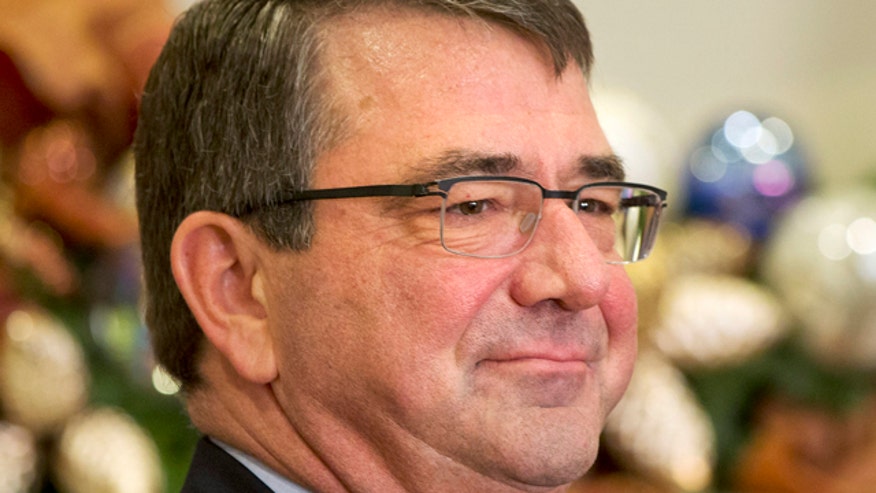
Pentagon Chief_Cham640360020415.jpg FILE – In this Friday Dec. 5, 2014 file photo, Ashton Carter listens as the president announces Carter as his nominee for defense secretary in the Roosevelt Room of the White House in Washington. (AP Photo/Jacquelyn Martin, File)

Ashton Carter, President Obama’s nominee to replace Chuck Hagel as Secretary of Defense, will tell Senators at his confirmation hearing Wednesday that counterterror operations may need to be expanded to stem the tide of foreign fighters joining up with the ISIS terror group. 

“I believe foreign fighters pose a threat to the U.S., and that this threat is exacerbated by the ongoing political and security instability in Libya,” Carter says in remarks prepared for testimony before the Senate Armed Services Committee and obtained by The Washington Times. “If confirmed, I will focus attention on the foreign fighter flow as the department works with regional partners in North Africa to address the challenge posed by the terrorist safe haven in Libya and broader counterterrorism issues.”

Carter will face the panel one day after the terror group released a grisly video showing a captured Jordanian Air Force pilot being burned alive. In response to written questions from the committee, Carter said that he is aware of reports that ISIS may try to expand into Afghanistan, and that he will work with NATO coalition partners to ensure that does not happen. 

Carter also said he would consider changing plans for withdrawing all U.S. troops from Afghanistan by the end of 2016 if security conditions worsen. About 10,600 U.S. troops remain in Afghanistan.

Wednesday’s hearing is likely to focus as much on Obama’s foreign policy as on Carter’s own vision for the Defense Department, with the 60-year-old likely to face questions on Russian actions in Ukraine, Iran’s nuclear ambitions, and Obama’s push to close the detention facility at Guantanamo Bay, Cuba, among other issues.

Another thorny issue Carter faces is an uncertain outlook for the defense budget. In his remarks, Carter is expected to acknowledge that the Pentagon must end wasteful practices that undermine public confidence even as he criticizes the automatic spending cuts known as sequestration.
“I cannot suggest support and stability for the defense budget without at the same time frankly noting that not every defense dollar is spent as well as it should be,” Carter says in his remarks. “The taxpayer cannot comprehend, let alone support, the defense budget when they read of cost overruns, lack of accounting and accountability, needless overhead and the like.”

If confirmed, Carter would be the fourth Secretary of Defense to serve under Obama, after Robert Gates, Leon Panetta, and Hagel. The relationship between the White House and the Pentagon has often been strained, with some officials in the department saying Obama views the military skeptically and centralizes decision making in the West Wing. Hagel, in particular, is said to to have grown particularly frustrated with the policymaking process overseen by national security adviser Susan Rice. Gates and Panetta have publicly aired their grievances with what they saw as White House micromanagement.

Carter served twice previously in Obama’s Pentagon, most recently as deputy defense secretary from 2011 to 2013. He was assistant secretary of defense for international security policy during the administration of President Bill Clinton.

Carter would be the first defense secretary who has not served in the military or Congress since Harold Brown, who was appointed by President Jimmy Carter and led the Pentagon from 1977 to 1981.

Click for more from The Washington Times.

The Associated Press contributed to this report.


View the original article here


Secretary of Defense nominee Carter wants to focus on ISIS, expand counterterrorism operations

How baleen whales hear

whalebaleenpic1.jpg A humpback whale is seen near the coast of Mazatlan January 17, 2012. (REUTERS/Stringer)
Baleen whales, the largest creatures on Earth, can send extremely low-frequency underwater calls to one another. But little is known about how they actually process these sounds. Now, researchers have found that the whales have specialized skulls that can capture the energy of low frequencies and direct it toward their ear bones to hear.

Baleen whales, which use baleen plates in their mouths to filter out tiny organisms and other food from the ocean, have two ways of hearing sound, the researchers found. If the sound waves are short — that is, shorter than the whale’s body — the sound’s pressure waves can travel through the whale’s soft tissue before reaching the tympanoperiotic complex (TPC), which holds the whale’s rigid ear bones on its skull.

But if the sound waves are longer than the whale’s body, they can vibrate its skull in a process known as bone conduction. These longer wavelengths can be amplified, or louder, when they vibrate the skull, the researchers said. [Images: Sharks & Whales from Above]

In 2003, despite rescue efforts, a young fin whale (Balaenoptera physalus) died after it beached itself on Sunset Beach in Orange County, California. The researchers saved the whale’s head and used it in their study. The whale’s head was placed in a CT scanner so that it could be modeled on a computer. The resulting model included the whale’s skin, skull, eyes, ears, tongue, brain muscles and jaws, and allowed the researchers to simulate how sound might travel through the whale’s head.

The model may only show the fin whale’s anatomy, but the scientists hope to study other types of baleen whale species, including blue whales, minke whales, right whales and gray whales, the researchers said.

Before running the simulations, the researchers used a method known as finite element modeling, which breaks down the model skull into tiny pieces and tracks how they work with one another. It’s almost like dividing the whale’s head into Lego blocks, said San Diego State University biologist Ted Cranford, one of the study’s researchers. During simulation trials, the distinct “blocks” allowed them to see how each component of bone vibrated at different frequencies.  

“At that point, computationally, it’s just a simple physics problem,” Cranford said in a statement. “But it’s one that needs lots and lots of computational power. It can swamp most computers.”

The simulations showed that the whale’s bone-conduction mechanism is about four times more sensitive to low-frequency sounds than the pressure mechanism that goes through the TPC. In fact, the lowest frequencies used by fin whales (10 hertz to 130 hertz) is up to 10 times more sensitive in cases of bone conduction, the researchers found.

“Bone conduction is likely the predominant mechanism for hearing in fin whales and other baleen whales,” Cranford said. “This is, in my opinion, a grand discovery.”

The new finding may help strengthen the case for laws that limit the amount of man-made noise pollution thought to interfere with the whales’ underwater calls, including noise from commercial shipping, military exercises and drilling operations for oil and natural gas, the researchers said.

“What our contribution does is give us a window into how the world’s largest animals hear, by an odd mechanism no less,” Petr Krysl, an engineer at the University of California, San Diego, said in a statement. “This research has driven home one beautiful principle: Anatomic structure is no accident. It is functional, and often beautifully designed in unanticipated ways.”

The study was published online Jan. 29 in the journal PLOS ONE.

Copyright 2015 LiveScience, a TechMediaNetwork company. All rights reserved. This material may not be published, broadcast, rewritten or redistributed.


View the original article here


How baleen whales hear

Golfer who broke PGA Tour"s color barrier dead at 92

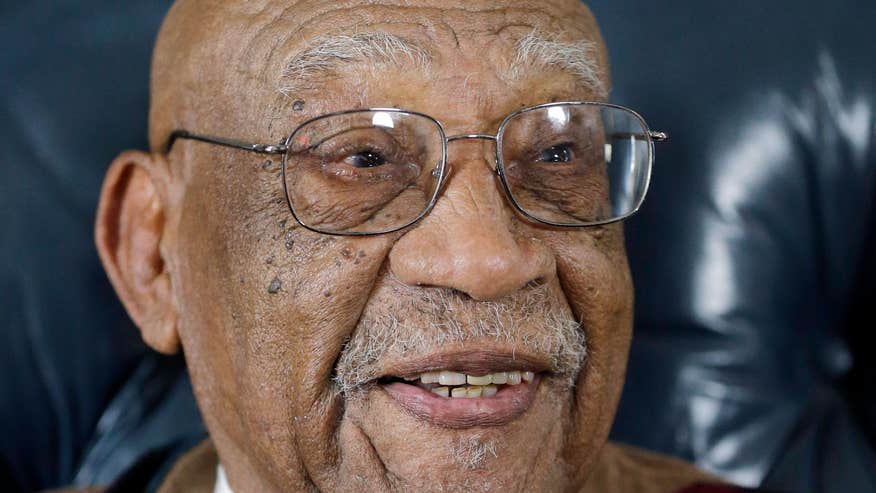
golfer-sifford-dead.jpg Nov. 13, 2014: Former PGA golfer Charlie Sifford talks during an interview at his home in Brecksville, Ohio. (AP)
Charlie Sifford, who only wanted a chance to play and broke the color barrier in golf as the first black PGA Tour member, died Tuesday night, the PGA of America said.

Sifford, who recently had suffered a stroke, was 92. Details of his death and funeral arrangements were not immediately available.

“His love of golf, despite many barriers in his path, strengthened him as he became a beacon for diversity in our game,” said PGA of America President Derek Sprague. “By his courage, Dr. Sifford inspired others to follow their dreams. Golf was fortunate to have had this exceptional American in our midst.”

A proud man who endured racial taunts and threats, Sifford set modest goals and achieved more than he imagined.

Sifford challenged the Caucasian-only clause and the PGA rescinded it in 1961. He won the Greater Hartford Open in 1967 and the Los Angeles Open in 1969. He also won the 1975 Senior PGA Championship, five years before the Champions Tour was created.

His career was fully recognized in 2004 when he became the first black inducted into the World Golf Hall of Fame. Last November, President Barack Obama presented him with the Presidential Medal of Freedom. Jack Nicklaus and Arnold Palmer are the only other golfers who received that honor.

“Charlie won tournaments, but more important, he broke a barrier,” Nicklaus once said. “I think what Charlie Sifford has brought to his game has been monumental.”

The one goal that eluded him was a chance to play in the Masters, which did not invite its first black player until Lee Elder in 1975. Sifford remained bitter, though the pain was eased when Tiger Woods won the first of his four green jackets in 1997.

Woods often has said he would not have played golf if not for Sifford and other black pioneers.

“It’s not an exaggeration to say that without Charlie, and the other pioneers who fought to play, I may not be playing golf,” Woods said in an email to The Associated Press late last year. “My pop likely wouldn’t have picked up the sport, and maybe I wouldn’t have either.”

The road was never easy.

Sifford was born on June 22, 1922 in Charlotte, North Carolina. He worked as a caddie and dominated the all-black United Golfers Association, winning five straight national titles. He longed to play against the best players, only to run into the same barriers that Teddy Rhodes and Bill Spiller faced — the Caucasian-only clause.

In his autobiography, “Just Let Me Play,” Sifford told of meeting Jackie Robinson in California about the time Robinson was trying to break the color barrier in baseball.

“He asked me if I was a quitter,” Sifford wrote. “I told him no. He said, ‘If you’re not a quitter, you’re probably going to experience some things that will make you want to quit."”

During the 1952 Phoenix Open, one of the few events that blacks could play, Sifford found human feces in the cup when he got to the first green. He received death threats over the phone at the 1961 Greater Greensboro Open and heard racial slurs as he walked the fairways. He finished fourth, and didn’t quit.

He was beloved my some of golf’s biggest stars, including Nicklaus and Arnold Palmer.

During his induction ceremony, Sifford told of his first meeting with Palmer. They were playing in the 1955 Canadian Open and Sifford opened with a 63 to lead Palmer by one shot. He recalled Palmer standing in front of the scoreboard saying, “Charlie Sifford? How the hell did he shoot 63?”

“I’m standing right behind him,” Sifford said. “I said, ‘The same damn way you shot 64.’ That’s how we met.”

Sifford also received an honorary doctorate degree from the University of St. Andrews in Scotland for his career as a pioneer.

He often attended the Bridgestone Invitational at Firestone, not far from his home in Ohio. During an interview with the AP in 2000, Sifford said he was proud of the role in played in making the PGA Tour accessible to blacks.

”If I hadn’t acted like a professional when they sent me out, if I did something crazy, there would never be any blacks playing,” he said. “I toughed it out. I’m proud of it. All those people were against me, and I’m looking down on them now.”


View the original article here


Golfer who broke PGA Tour"s color barrier dead at 92

GOP-led House votes to repeal ObamaCare - Bill to undo Obama immigration actions, fund DHS fails in Senate test vote

WASHINGTON –  The House voted Tuesday to repeal the Affordable Care Act, getting Republicans on record in favor of overturning the law for the first time since the party took control of Congress.

The bill passed on a 239-186 vote. 

President Obama already has threatened to veto the legislation — and like past bills to repeal ObamaCare, it is unlikely to go far under the current administration, despite Republicans now controlling the Senate and having a bigger majority in the House.

But the vote serves as an opening shot in the 114th Congress’ efforts to chip away at the law. Several lawmakers have introduced bills to change or undo parts of the Affordable Care Act, and some could garner bipartisan support. 

“We need health care reform that makes the system more responsive to patients, families and doctors — reforms that preserve and protect the doctor-patient relationship. Right now, ObamaCare is moving our health care system in the exact opposite direction where the American people are paying more and getting less,” Rep. Tom Price, R-Ga., said in a statement after the vote. “In the House of Representatives, we are saying we need to get rid of this law that’s not working and focus on solutions that will embrace the principles of affordability, accessibility, quality, innovation, choices, and responsiveness.” 

Prior to the vote, Obama questioned the logic behind it.

“So my understanding is the House scheduled yet another vote today to take health care away from folks around this table,” Obama said during a meeting with 10 people who have written him letters about how the ACA has helped them.

He added, “I’ve asked this question before. Why is it that this would be at the top of their agenda? It was maybe plausible to be against the Affordable Care Act before it was implemented. But now it has been implemented and it is working.”

The House has voted more than 50 times in the past two years to repeal all or parts of the law.

The legislation would go next to the Republican-controlled Senate.

While some say the vote is a symbolic gesture, the push to repeal ObamaCare comes as the Supreme Court weighs the King v. Burwell case, which challenges the legality of some subsidies offered through the president’s signature health care law. If the Supreme Court upholds a lower court’s verdict, it could severely undermine the law and fuel GOP efforts to at least change it. 

Republicans, as their next major step, are planning to draft legislation offering an alternative to the ACA. The bill approved Tuesday also directs House committees to begin work on an alternative plan, in case the Supreme Court rules against the law. 

The Associated Press contributed to this report. 


View the original article here


GOP-led House votes to repeal ObamaCare - Bill to undo Obama immigration actions, fund DHS fails in Senate test vote

Lance Armstrong cited after 2 parked cars hit by SUV

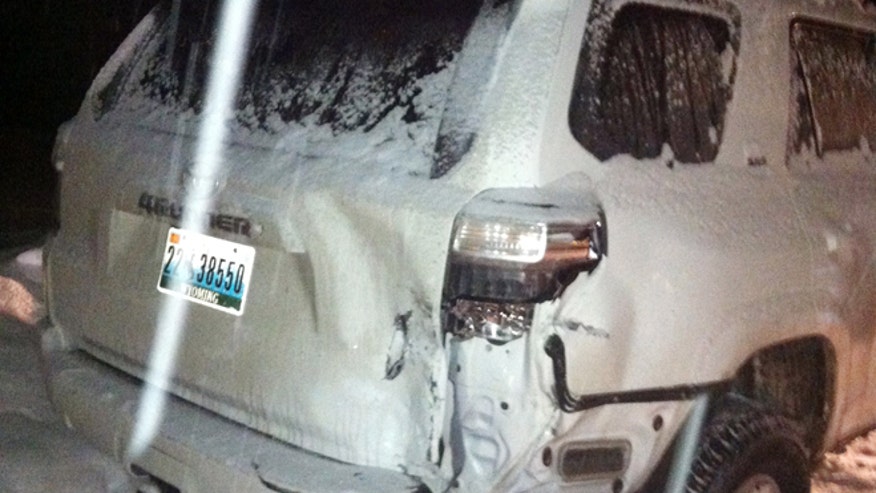
armstronginternal515158.jpg Dec. 28, 2014: This photo provided by the Aspen Police Department shows one of the two vehicles involved in a hit-and-run in Aspen, Colo. (AP)

DENVER –  Disgraced cyclist Lance Armstrong hit two parked cars with an SUV after a night of partying in Aspen, Colorado, but agreed to let his longtime girlfriend take the blame to avoid national attention, police reports show.

Police cited Armstrong with failing to report an accident and speeding weeks after the Dec. 28 accident, but only after his girlfriend, Anna Hansen, acknowledged lying for him.

Armstrong declined immediate comment on Tuesday. His attorney, Pamela Mackey, didn’t immediately return a call.

Hansen initially told police she had been driving home from an Aspen Art Museum party when she lost control of Armstrong’s GMC Yukon on icy roads, hitting the cars. She said she drove because “Lance had a little bit to drink,” according to the reports.

A man who had been renting one of the damaged cars told a police detective that Hansen came running up to his house in high heels, apologizing and promising to pay for the repairs.

“She said, `I’m Anna, we’re the Armstrongs, my husband’s Lance, he was just driving maybe too fast around the corner or something,”‘ the man, Thomas Van Allen, told police, according to the reports.

Police say Hansen and Armstrong left the scene before police arrived.

Detectives later interviewed Hansen, who eventually told them Armstrong was driving, but the couple had decided to let her take the blame.

“We’ve had our family name smeared over every paper in the world in the last couple of years and honestly, I’ve got teenagers, I just wanted to protect my family,” Hansen told police, the reports state. “I thought, gosh, Anna Hansen hit some cars, it’s not going to show up in the papers, but Lance Armstrong hit some cars, it’s going to be a national story.”

Failure to report an accident is a misdemeanor punishable by up to 90 days in jail and a fine of between $150 and $300.  Driving too fast for conditions is punishable by a fine between $15 and $100.

Hansen is not charged with a crime.

The Aspen Daily News first reported the citation. Armstrong is scheduled to appear in court March 17.

Armstrong won the Tour de France every year from 1999 to 2005. Those titles were stripped after a massive report by the U.S. Anti-Doping Agency detailed the use of performance enhancing drugs by Armstrong and his U.S. Postal Service teammates.


View the original article here


Lance Armstrong cited after 2 parked cars hit by SUV

Argentina president under fire for tweets mocking Chinese accent

China Argentina_Cham640360020515.jpg Feb. 4, 2015: Chinese President Xi Jinping, right, and Argentinian President Cristina Fernandez shake hands after signing documents following their meeting at the Great Hall of the People in Beijing. (AP Photo/Rolex Dela Pena)
Embattled Argentine President Cristina Fernandez, while on a state visit to China seeking badly needed investment, caused a furor Wednesday by joking about her hosts’ accents on Twitter.

Fernandez tried to mimic a Chinese accent by switching “r’s” with “l’s” in a tweet in Spanish that translates as: “Did they only come for lice and petloleum.”

A few minutes later, she added: “Sorry, the levels of ridiculousness and absurdity are so high they can only be digested with humor.”

The tweets came as she met with Chinese President Xi Jinping.

As of late Wednesday, there was no official response from China about the comments by Fernandez, a prolific tweeter who has 3.53 million followers.

But that didn’t stop the Twitterverse in the South American country and beyond from exploding with criticism of what many considered a racist tweet.

“Cristina Fernandez’s lack of tack and respect is incredible,” wrote @FaundezLafarga. “She goes to China looking for (economic) agreements and she makes fun of their accents.”

@GuyChazan wrote: “Faux pas in China. Really, this sort of joke went out of fashion in the 70s.”

The latest controversy comes as Fernandez struggles to distance herself from the mysterious death of prosecutor Alberto Nisman, who was found dead in his bathroom Jan. 18, hours before he was to elaborate on allegations that Fernandez helped shield Iranians connected to the 1994 bombing of a Jewish community center that killed 85.

Fernandez has vehemently denied the accusations, saying Argentina had nothing to gain from such a deal. She has suggested that rogue elements in the intelligence services ordered Nisman’s hit, but has not elaborated.

Earlier this week, just as her visit to China was getting underway, investigators looking into Nisman’s death said they had found a of an arrest warrant for Fernandez that Nisman had written up. While he never presented it, the revelations brought Fernandez back to the center of the case.

On Wednesday, relatives of victims of the bombing marched with family members of the victims of Argentina’s military dictatorship and other national tragedies to demand an end to impunity and the truth about what happened to Nisman.

Hundreds of demonstrators gathered in front of Congress in Buenos Aires with the march ending in the famed Plaza de Mayo.

“The demand for truth and justice that relatives of the AMIA (Jewish center) victims are making is the same as what we want for the 30,000 people who disappeared” during the dictatorship, said Nora Cortinas, who co-founded the Mothers of the Plaza de Mayo human rights group.


View the original article here


Argentina president under fire for tweets mocking Chinese accent

"HE WAS IN DANGER" Mystery surrounds death of US worker at Saudi Hotel

Cramer2.jpg US defense contract worker Chris Cramer in a picture taken just days before his body was found outside his hotel in Tabuk, Saudi Arabia.

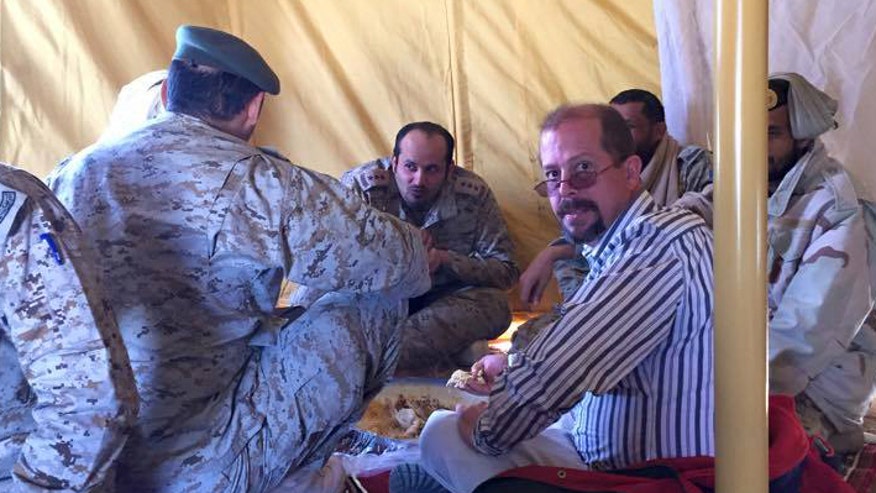
The mysterious death in Saudi Arabia of an American defense contractor who fell from a third story hotel window has family and friends emphatically denying his employer’s original claim that he committed suicide.

New Hampshire native Christopher Cramer, 50, was found dead on Jan. 15 after a three-story tumble from the window of the Sahara Makarim Hotel in the city of Tabuk, where he was staying.

Cramer was in the region for Advance Defense Systems of Kollsman, providing technical assistance for a demonstration and sale of a TOW anti-armor missile system. His employer originally told family members that Cramer had committed suicide, a claim they immediately disputed, citing chilling messages begging for help that he sent to a friend just before his death.

“He called me three times that night and left me messages saying that he was in danger and to call the State Department,” Cramer’s friend and family attorney Noah Mandell told FoxNews.com. “He was there, he was in danger, and I believe he was killed.

“What’s troublesome is the cover-up. The announcement by the company that it was a suicide before seeing all the evidence is strange.”

“I know he didn’t commit suicide. You don’t send out a text like that before jumping out of the window.”

- Jennifer Kelly, sister of Chris Cramer

Cramer’s family agrees with Mandell. Those who knew him say he was a happy person who never showed signs of depression or wanting to take his own life.

“He was a happy guy,” Cramer’s nephew, Chris Arsenault, told FoxNews.com. “He was always a strong-willed man who lived for his family.”

Arsenault added that when his uncle could not reach Mandell, he texted another friend pleading for help.

“I’m at the Marakim tabuk hotel in Saudi,” reads a screengrab of the text message provided to FoxNews.com. “I think something bad is going to happen to me tonight. Please contact state dept ASAP. Bad things were said.”

Arsenault said that the messages were not typical of Cramer and that he spoke to him just a few days before his death and nothing seemed wrong.

“It just wasn’t right,” he said. “He would not send a text like that unless he was truly in trouble.”

Kollsman quickly backed away from its claim that Cramer committed suicide after his family rejected it.

In a statement provided to FoxNews.com, a representative for the company said it was working to help obtain police reports and have Cramer’s body sent back to his family in Hudson, N.H. for burial.

“We are all deeply saddened by the sudden passing of Chris Cramer and are offering our continuous support and assistance to Chris’ family and his colleagues, Clark Freise, a vice president with Kollsman, said in the statement.  “Like the family, we are eager to learn more about his death and are in continuous contact with the U.S. Department of State to strongly encourage their assistance in obtaining the final report of the local police regarding the circumstances surrounding Chris’ passing. It is important to bring Chris home to his loved ones and we are working closely with the family to expedite the repatriation of Chris.”

State Department officials did not immediately return requests for comment but had issued an earlier statement after Cramer’s death.

“We can confirm that U.S. citizen Christopher J. Cramer died outside the Sahara Makarim Hotel in Tabuk on January 15,” reads the statement. “We express our deepest condolences to his family and friends. Officials from the U.S. Consulate General in Jeddah, Saudi Arabia are in contact with the family and are providing consular assistance.

“Out of respect for the privacy of those affected by this tragedy, we will not comment further. For questions regarding the investigation, we refer you to the Tabuk Police Department.”

Cramer’s family describes him as a loving man who always put his family first.

“He’s the type of soul that would do anything for anyone,” his sister, Jennifer Kelly, told FoxNews.com. He had a great enthusiasm. He could light up the room.”

Kelly said that Cramer left on January 8 and told her not to worry, that he would be back in a few weeks.

“I think I had a harder time with him going than he did,” she said. “He told me, ‘Jen, don’t worry.’

“He was a little nervous But I think anyone would, given what’s going on in the region. I think he felt that Kollsman had his back but I think he had a false sense of security.”

The family is hoping for more answers.

“I know he didn’t commit suicide,” Kelly said. “You don’t send out a text like that before jumping out of the window.”

“I feel like they [Tabuk police] are covering something up,” she said. “We just don’t want to see this go away and be swept under the rug.”

Follow Perry Chiaramonte on Twitter: @Perrych


View the original article here


"HE WAS IN DANGER" Mystery surrounds death of US worker at Saudi Hotel